










































Peace Through Development (PDEV) Niger
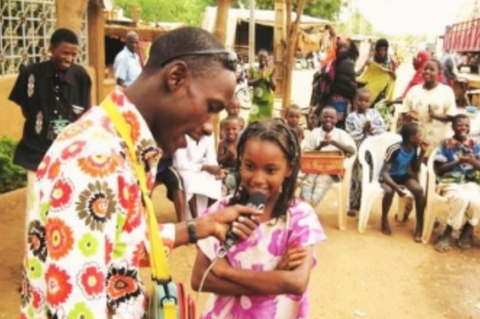
In 2008, Equal Access began working in Niger as the media partner in the United States Agency for International Development (USAID) funded Peace through Development (PDEV) project. Using a participatory radio methodologies, Equal Access’ team of Nigerien producers engages listeners through the production of three weekly radio series complemented by civil society strengthening and engagement activities such as listening and dialogue groups and and trainings for religious leaders. In addition to producing radio programmes, Equal Access implements a variety of other media activities designed to support the Nigerien radio sector including technical and management trainings, radio mapping, and the introduction and integration of new media technology.
Equal Access produces three radio series in Niger:
- Good Governance Radio Programme: Hantsi Leka Gidan Kowa - this radio soap opera series focuses on good governance and addressing issues including transparency, corruption, tolerance, and civic participation. This Hausa-language title refers to the first soft rays of morning sun that light up the entire house. The weekly series is created using the Sabido entertainment-education methodology and involves entertaining plots and characters with whom the intended audience (30-60 year-old men and women) can empathise.
- A Youth Radio Program: Gwadaben Matasa (Youth Boulevard) - this is a presenter-led chat show centered on issues of importance to youth in Niger and developed by youth for youth. The show focuses on peaceful ways of addressing grievances, tolerance, livelihoods information, problem solving, and additional topics including HIV/AIDS, family relations, marital violence, hygiene, and the environment. The format of the programme includes a combination of music, vox pops (sound bites from passers-by), interviews, and mini-dramas. Content collected by youth Community Reporters in all five regions is also integrated into the show and each week an estimated 2.4 million young people tune into the programme.
- Religious Program: Sada Zumunci (Solidarity and Fraternity) - this radio series is designed to promote inter- and intra-religious dialogue in Niger. This magazine style series is co-produced by a local Islamic station. The series includes themes on the peaceful coexistence between religions, inter- and intra-religious friendships as vectors of ethnic stability; and the place and role of religious leaders in cultivating peace.
Equal Access used a number of approaches in producing the programmes:
Stakeholder workshops
To ensure the content of the programming is technically accurate and culturally appropriate as well as entertaining and engaging, Equal Access’ team of local media professionals hold Stakeholder Workshops to gather important input for the radio programmes, and Content Advisory Groups meet monthly to discuss and provide technical expertise for upcoming episodes.
Listening Clubs
Listening Clubs gather together thousands of listeners to share views on programme messages amongst peers, and Community Reporters contribute to the series content and the presence of the programme in the community.
New Media
In addition to the radio programmes, Equal Access is increasingly incorporating new media, particularly mobile technology and interactive elements. The Niger team incorporates interactive components designed to allows audiences to send specific questions, comments, or requests for information via text message (SMS). Information can also be sent out by the producers to listeners via SMS. Another new media technology that EA is implementing in Niger is interactive voice response (IVR).
Support of FM partner stations
Equal Access also supports FM partner stations through the delivery of a variety of trainings and equipment, to assist them to produce their own high-quality local programmes around similar themes of good governance and tolerance. Some of the training includes digital audio editing, producing local call-in programmes, integrating life skills into radio production, and management skills.
Radio mapping
To determine accurate figures of the broadcast reach of the partner radio stations, Equal Access visited over 40 stations in the PDEV regions in Niger, compiling technical information including the heights of the antennas, capacities of the transmitters, and GPS coordinates of the station. With this data, Equal Access was able to calculate the geographical coverage and estimated audience reach for each station and shared the information with the radio stations. For the first time this gave the radio stations a sense of their actual reach and this knowledge allows them to focus their limited resources in more targeted ways.
Good Governance, Human Rights
According to Equal Access, by promoting dialogue amongst the population, including among groups divided by tribal lines, vocational roles, religious beliefs, socioeconomic status, or other boundaries, the programming succeeds in demonstrating a clear avenue for listeners to develop their communities through peace and stability.
Equal Access, United States Agency for International Development (USAID)
Equal Access website on April 17 2012.
- Log in to post comments