










































Report on the Meeting of the Technical Advisory Group for the Eradication of Poliomyelitis in Afghanistan [January 2016]
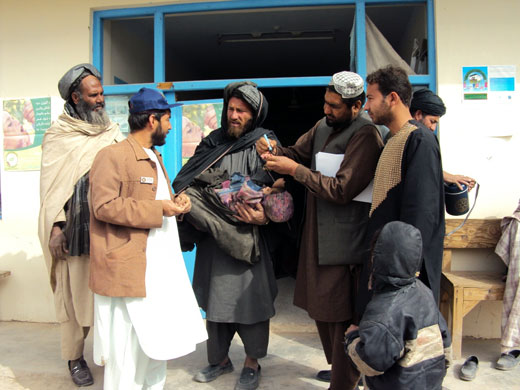
"The TAG acknowledges the increased focus on household and community engagement approaches to build further trust as an important and necessary addition to mass media activities. However, more emphasis must now be placed on expanding this work between campaigns and systematically monitoring activities to ensure they are having impact."
This report summarises the discussions of the Technical Advisory Group (TAG) on Poliomyelitis Eradication in Afghanistan, January 24-25 2016, Kabul, Afghanistan. In the context of the continuing transmission in Afghanistan and the opportunity to interrupt transmission in the coming low transmission season, the meeting of the Afghanistan TAG was called with 2 key objectives: (i) to review the progress in polio eradication activities, particularly in implementation of the national emergency action plan (NEAP) 2015–2016 in past 6 months; and (ii) to make recommendations to achieve the interruption of transmission by June 2016.
Noting that there has been significant progress in polio eradication globally, with a decrease in the number of cases from 359 in 2014 to 72 in 2015, the TAG notes that Afghanistan and Pakistan, which form one epidemiological block, are the only remaining areas in the world infected with wild poliovirus type 1 (WPV1). The TAG notes that the deteriorating security situation and increased inaccessibility, particularly in Eastern and Northern regions, are a concern. Fortunately, the country has mechanisms in place to address inaccessibility which need to be continually refined and adjusted - a priority area that the country is better equipped to handle due to "significant improvement in programme oversight, management and coordination through establishment of national and regional emergency operations centres (EOCs), and there is a strong partnership between government, United Nations agencies, and other partners." Along the lines of the importance of collaboration, the Tag notes that there is a mechanism for cross border coordination with Pakistan at national, regional, and district levels, but it needs to be strengthened, particularly in Eastern corridor.
Amongst the TAG's recommendations are some communication-centred ones, such as:
- The national EOC should have a systematic weekly teleconference or videoconference with regional EOCs to track progress and provide feedback and support in the implementation of the NEAP.
- Development and implementation of a clear and transparent accountability framework needs to be accelerated.
- Full implementation of the NEAP 2015-16 should be ensured and reviewed through monthly progress reports using the NEAP tracking dashboard. The country should initiate the process of developing the NEAP 2016-17 early enough to ensure that a draft NEAP is presented at the next TAG meeting (May 2016).
- The TAG recommends fast-tracking thorough field validation and revision of microplans for low-performing districts priority 1 and 2 with integrated social components before the end of the first quarter of 2016.
- The revisit strategy should be strengthened and expanded to all 5 high-risk provinces by the March national immunisation day campaign and the entire country before the next TAG meeting.
- The programme should conduct in-depth analysis of missed children due to "not available" and use the information to modify strategies. Data on children missed should be disaggregated by "refusals, newborn, sick, and sleeping", with each of the 4 as a distinct category of analysis to support development of micro-strategies in response.
- The process of revising the training module for frontline workers (FLWs) and rolling it out should be fast-tracked.
- Intra-campaign data should be used to identify gaps and for corrective action in preparation for and during the subsequent campaign.
- The impact of the community health volunteer (CHV) initiative should be evaluated against traditional strategies. The pilot in Nangarhar should be fully analysed and another pilot should be undertaken in a low-performing district in Southern region.
- Current programme activities and plans should be reviewed to maximise the engagement and contribution of external partners, such as in-country non-governmental organisations (NGOs) implementing the basic package of health services (BPHS).
- Robust preparations should be conducted for supplementary immunisation activities (SIAs) with inactivated polio vaccine (IPV), with particular attention paid to having integrated microplans that incorporate social mobilisation activities, among other components.
- Coordination between the Eastern/South-eastern regions of Afghanistan and Khyber Pakhtunkhwa/Federally Administered Tribal Areas in Pakistan should be improved through bi-annual face-to-face meeting and fortnightly teleconferences at the regional level.
- Low-performing priority 1 and 2 districts of Afghanistan contiguous to Tier 1 and 2 districts in Pakistan should have stronger coordination at the sub-district level, with information sharing, risk management at the micro-level and continued joint analysis of these areas.
- Urgent action needs to be taken to improve surveillance in areas with low stool adequacy. Surveillance data should also be analysed by access status, with the outcome shared with the TAG at its next meeting.
- Household and community engagement approaches should be expanded in low-performing priority 1 and 2 districts based on local issues. Every district should have an issue-specific monthly communication plan tracked by the EOC.
- More focus should be placed on continuous communication approaches, including the work of the Immunization Communications Network (ICN), which goes beyond SIAs - allowing more time for pre- and post-campaign mobilisation and missed children tracking and immunisation. The monitoring and evaluation platform should be strengthened to focus on measuring results of communications/social mobilisation activities and promoting accountability.
- Preparations for the switch to bivalent OPV (bOPV) should be monitored closely and the switch date synchronised with Pakistan.
- The polio legacy plan for Afghanistan should include a strong section on using the experience and infrastructure of polio to strengthen the delivery of basic immunisation services.
With regard to the plan for the next 6 months to interrupt poliovirus transmission, communication-related suggestions include: Strengthen communication human resources (HR) capacity; create a more focused enabling environment to promote trust in vaccination; expand radio partnerships focused on high-risk districts; scale up household and community engagement approaches, including between campaigns; standardise ICN structure/activities throughout high-risk districts; develop monthly district-specific communication action plans; improve monitoring of communication approaches; and equip CHVs and FLWs with interpersonal (IPC) training and Rotary's PolioPlus materials.
Email from Poliomyelitis Eradication Programme, WHO/EMRO to The Communication Initiative on April 19 2016. Image credit: Poliomyelitis Eradication Programme, WHO/EMRO
- Log in to post comments