










































Report on the Meeting of the Technical Advisory Group for the Eradication of Poliomyelitis in Afghanistan [November 2017]
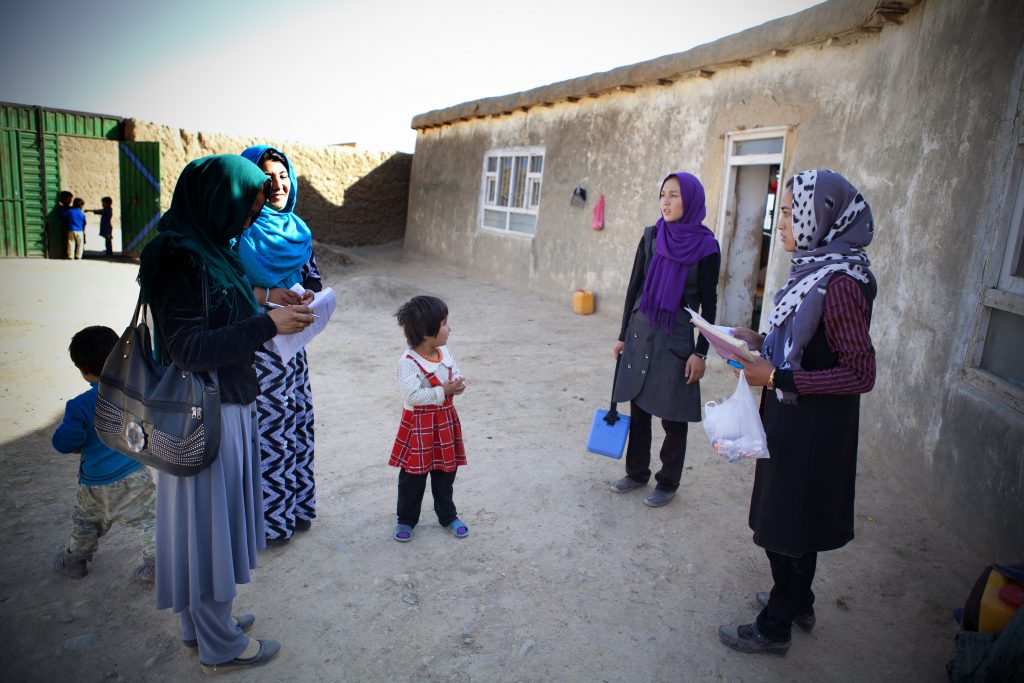
"TAG commends the exceptional levels of commitment, creativity and resilience displayed by the [Afghan/Pakistan] Programme, often under extremely challenging conditions."
This report summarises the discussions of the Technical Advisory Group (TAG) on Poliomyelitis Eradication in Afghanistan, November 26-27 2017 in Kabul. The objectives of the meeting were to: (i) review the status of polio eradication efforts and implementation of the National Emergency Action Plan (NEAP) 2016-2017 since the last TAG; and (ii) review the NEAP 2018 and make recommendations for modifications, as needed. (NEAP 2018 has the aim to "stop wild poliovirus [WPV] transmission in Afghanistan by the end of low transmission season (July 2018), with no WPV1 thereafter.")
Globally, there has been significant progress, with the number of polio cases decreasing from 37 in 2016 to 21 in 2017. No polio cases were detected in Nigeria in 2017, while Afghanistan and Pakistan reported 14 and 8 cases respectively. Afghanistan and Pakistan form one common reservoir for poliovirus transmission; according to TAG, the collaboration between both programmes is getting stronger at all levels, while steady progress is made towards stopping transmission.
TAG notes that 22 of 31 recommendations made during the meeting in April 2017 have been fully implemented, and the remaining 9 recommendations have been partially implemented, even in the face of the deteriorating security situation. The partial progress on household-based microplanning has been significant, though more needs to be done to understand reasons for missed children; joint outbreak response along border areas needs to be systematised; new staff selection standard operating procedures (SOPs) to support the engagement of more female frontline workers (FLWs) need to be implemented; the new transit strategy SOPs need to be quickly implemented, and; the SOP for Polio Eradication Initiative (PEI) support to the Expanded Programme on Immunization (EPI) needs monthly feedback meetings with basic package of health services (BPHS) non-governmental organisations (NGOs) to be initiated. It also noted that NEAP 2016-2017 was fully implemented and appreciates that the programme introduced many additional initiatives to address emerging challenges.
Some of the communication-centred elements highlighted in the report:
- Despite the proportion of missed children decreasing to less than 2%, in very-very-high-risk districts (VHRDs) such as Kandahar, the proportion of refusals among missed children is as high as 47%. Pockets in the Southeast and East regions show a similar picture. Overall access has improved, and TAG commends the government for maintaining programme neutrality as a key factor to reaching every child, but 23,000 children in Nangarhar and Kunar have remained inaccessible for more than 3 years.
- There is strong political commitment at the highest level of the government. TAG also recognises the strong support and commitment of the World Health Organization (WHO), the United Nations Children's Fund (UNICEF), and others in the PEI. Partnerships between government, UNICEF, WHO, and other partners at national and regional levels continue to be strong.
- There are improvements in the overall acceptability of polio vaccination, intention to vaccinate, and other social indicators. Evidence-based communication and social mobilisation approaches are having positive impact at macro level, though there is room for improvement in the use of evidence-based tools such as microplans at the local level. It remains to be seen how new social data sources such as revised tally sheets will be utilised for social mobilisation work on refusals and catch-up and between-campaign work.
- Afghanistan continues to have a sensitive surveillance system including in areas affected by conflict or inaccessible for Supplementary Immunisation Activities (SIAs). The country continues to expand its reporting network and its environmental surveillance to cover all regions.
Selected recommendations made by TAG related to communication:
- In coordination with Pakistan, urgently conduct an exercise to identify potential population groups that may be harbouring and spreading transmission in the northern corridor. Using information from this exercise, develop a Northern Corridor Action Plan jointly with Pakistan by end of Q1 2018.
- Continue efforts to improve selection of FLWs, particularly in increasing engagement of females; make efforts to include females in selection committees and take concrete steps to ensure non-interference in selection of FLWs.
- For VHRDs with access limitations and the probability of on-and-off bans, the program should ensure regular dialogue with key authorities at local level to minimise potential disruptions to access. At the same time, efforts should be made to improve quality of campaigns by deploying appropriate national/regional level staff for improving programme basics.
- The trial of incorporating Immunization Communication Networks (ICNs) as team vaccinators should be expanded to a additional 4 districts in South and East (HRDs with challenges), making full use of any lessons learnt in the original 2 district trial; after 3 campaigns, results should be reviewed to inform further decisions on expansion.
- The TAG endorses the communication approaches that are outlined in the NEAP for 2018. In particular, special emphasis should be placed on tailoring approaches (engagement, media, interpersonal communication (IPC), and social mobilisation) to the local context, guided by social and programmatic data.
- TAG appreciates the analysis and more in-depth focus on missed children at the micro-level. It is clear, however, that gaps still exist, and more emphasis must be placed on further understanding the reasons for missed children - not only at the geographical cluster level, but also among social clusters. The approach that the programme is taking to assess the reasons for missed children to inform better planning at the cluster level should be the priority in the upcoming NEAP, working in full alignment with the overall campaign operations and guided by both qualitative and quantitative data.
"TAG believes that, given insight from other countries that have interrupted transmission, the Programme is in a very strong position to make the necessary final headway against the virus, but notes that what is needed now is to hold steady, focusing on maximising the quality of core, basic eradication activities, avoiding either complacency or panic in strategy, management and decision-making."
Global Polio Eradication Initiative (GPEI) website, May 7 2018. Image credit: WHO/R.Akbar
- Log in to post comments