










































Report on the Meeting of the Technical Advisory Group for the Eradication of Poliomyelitis in Pakistan [November-December 2017]
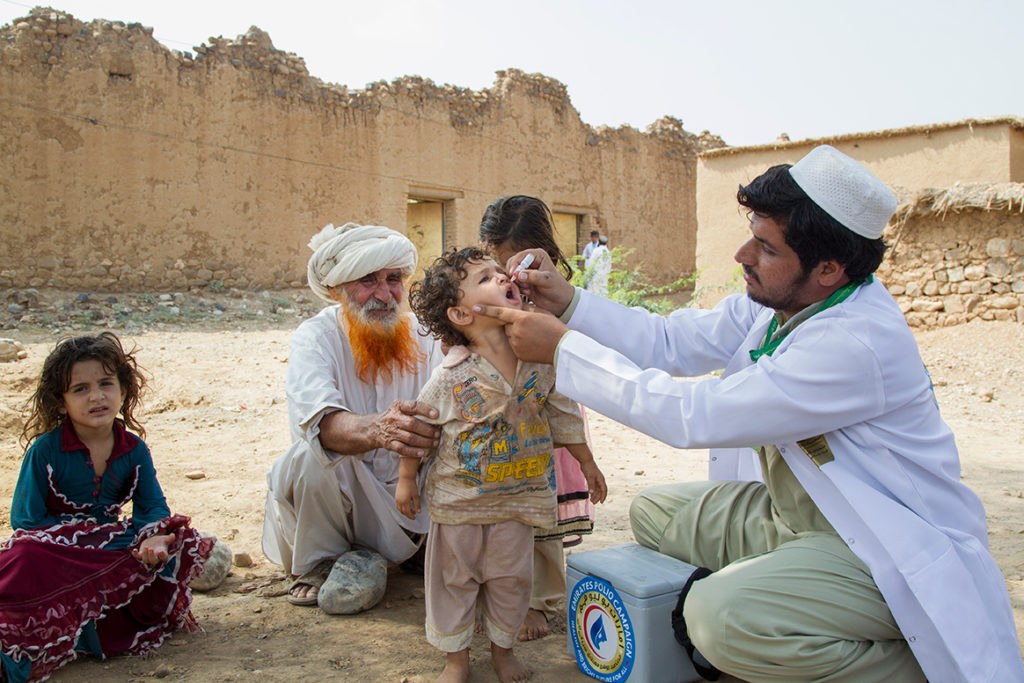
"Significant progress has been made towards the interruption of poliovirus transmission in the country with only 5 Wild Polio Virus (WPV) Type 1 cases reported in 2017 - a historic low....This has been made possible with the highest level of Government commitment, led by the Prime Minister, and implementation of all activities with a one-team, one-family approach."
This report summarises the discussions of the Technical Advisory Group (TAG) on Poliomyelitis Eradication in Pakistan, November 30-December 1 2017 in Islamabad. The Pakistan TAG met with the objective of conducting an expert review of the current epidemiological situation and developing recommendations specific to the country and each of its provinces. Despite progress, the TAG identified several risks to the Pakistan polio programme, in addition to the threat of ongoing transmission in the core reservoirs and across shared borders (with Afghanistan). The TAG surmised that the challenges to consistently reaching children in areas such as Karachi are exacerbated by serious difficulties in the programme's ability to connect with some communities, which has created gaps in fully addressing resistance in the highest-risk districts and has led to silent refusals, and ultimately to continued WPV circulation.
The report looks at progress and key findings from the overall Pakistan programme as well as in specific areas including Balochistan, Federally Administered Tribal Areas (FATA), Khyber Pakhtunkhwa (KP), Sindh, Punjab, and Twin Cities (Islamabad and Rawalpindi). Some of the communication-centred elements highlighted with regard to the overall programme:
- The Government's commitment and oversight remained strong at all levels, from the National Task Force (NTF) and the Prime Minister's Focus Group (PMFG), through to the network of Emergency Operations Centres (EOCs) and Deputy Commissioners leading polio activities in their respective districts.
- The transmission corridors, spanning contiguous areas of Pakistan and Afghanistan, underline the importance of effective programme coordination and collaboration between the Pakistan and Afghanistan programmes. The TAG commends the synchronisation of Supplementary Immunisation Activity (SIA) calendars for 2018 and encourages deep coordination on campaign, surveillance, and communications components of the two programmes.
- The TAG acknowledges the fact that the communication infrastructure within the programme is well developed, commends the robust one-team approach, and underlines that communication is integral to delivery of quality operations. The TAG also commends the current upsurge in district-level government oversight of planning and execution of communication activities in high-risk areas.
- The TAG re-emphasises that an understanding of the social context of clusters of missed children remains pivotal in vaccinating every child, especially among high-risk mobile populations (HRMPs). The TAG is observant of the fact that the media environment remains fluid and requires regulated focus and rigour, with the backdrop of upcoming elections.
Selected recommendations made by the TAG related to communication:
- High-quality campaign delivery operations must be complemented by a well-developed communication infrastructure. Community engagement is a proven approach to overcoming community resistance to vaccination rather than short-term, reactive, punitive measures, which have been demonstrated on numerous occasions as ultimately counterproductive.
- "Fatigue" should not be over-used as an explanation either for poor quality SIAs or falling acceptance among eligible households; the key response where fatigue does manifest is that "the job is not yet finished" and that any slips or gaps at this stage may be fatal to the whole national programme. Fully implement the existing communications strategies, focusing on the main themes of community ownership and engagement.
- Deputy Commissioner reviews should focus on acknowledgement of good work and transparency in reporting and create an atmosphere where problems are shared and discussed openly so they can be addressed.
- The TAG encourages persuasive approaches to tackling chronic refusals and strongly discourages forced vaccination.
- To better understand reasons for missed children, select very-high-risk clusters in Karachi, Killa Abdullah, and Peshawar should conduct focus group discussions (FDGs) over the next 3 rounds, analyse findings to formulate strategies to respond, and measure effectiveness in terms of reduced missed children, including "not available" and refusal children. It is recommended to break down "misperceptions" as a reason for refusal for targeted communication response.
- Generating increased social data around HRMPs can ensure targeted communication strategies to complement Northern/Southern Corridor Action Plan.
The TAG concludes that the low transmission season in the first months of 2018 represents an important opportunity to wipe out the remaining chains of poliovirus circulation and secure a polio-free Pakistan. The TAG believes that this is technically and programmatically feasible but will require a culture of transparency that identifies problems and urgently takes corrective actions resulting in all children in these areas being repeatedly immunised, until poliovirus circulation is no longer detected.
Global Polio Eradication Initiative (GPEI) website, May 7 2018. Image credit: © UAE Pakistan Assistance Program
- Log in to post comments