











































Reporters on the Borders Network
The project is working to strengthen journalists' capacity to better deal with migration issues, while also working with civil society organisations (CSOs) to improve their use of communication tools and media. The project is designed with a holistic approach that brings together media houses, community radio stations, journalists, CSOs, migration decision makers, migrants, and citizens in host countries. The key strategy is to bring together journalists and media to form a network, which can then collaborate to produce and broadcast programmes that provide information on migrant issues and advocate for the rights of migrants.
The project will comprise the following key activities:
- strengthen the capacities of African journalists and the media to produce information in African countries and in Europe that promotes awareness of migration in West Africa;
- encourage public debate on migration issues;
- support the cooperation and transfer of experience among media and CSOs to encourage high-quality information on migration issues; and
- work with CSOs to improve their skills and use of communication tools around migration.
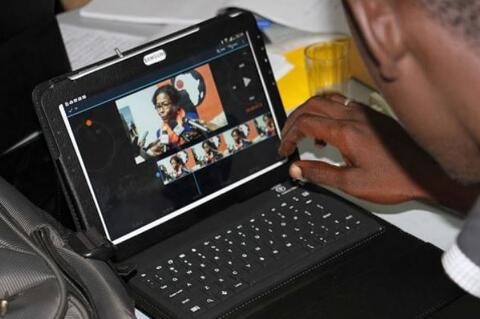
In March 2014, six Senegalese CSOs participated in a training workshop to learn how to use video testimonials to document the life stories or concerns expressed directly by migrants and their families. This was intended to "facilitate access, mastering and sharing of relevant information on migration issues, and also to arouse the interest of the various stakeholders, migrants and their families in different countries of the project." Following the training, a three-month production campaign tasked CSOs to collect stories and publish them on their blogs.
Migration
According to Panos, the project was created because "at the local level, community radios which are poorly equipped or organized, are struggling to deal with the concerns of populations in relation to migration, and also to relay the voices of migrants (especially women) and their families. Nationally, professional journalists still produce very little comprehensive information to inform the public about the impacts and migration issues." In addition, few CSOs have the capacity or skills to use the media to communicate about migration issues and advocate more effectively for improved legislation around migration. In fact, very few interact with the media at all.
The project builds on previous work conducted by Panos in West Africa. In 2011, the organisation conducted the "Undocumented and Unvoiced" project, which conducted training with media, journalists, community radios, and the public. The project also included a production campaign that resulted in 50 reports/investigations, 60 Radio Citizens Clubs programmes, and 30 radio and television debates.
Panos Institute West Africa, Ivorian Convention of Civil Society (CSCI), International Trade Centre for Development (CECIDE), Alternative Espace Citoyens (AEC), Senegal: African Encounter for the Defense of Human Rights (RADDHO), Ghana Community Radios Network (CBNRM), Cooperative Multimedia JAMANA (CMJ), Institute for Media and Society (IMSO)
Panos Institute West Africa website, Panos Institute West Africa website, and Reporters on the Borders Project [PDF] on October 29 2015.
- Log in to post comments