











































Social Norms: GSDRC Professional Development Reading Pack No. 31
"Evidence suggests that when norms are at play, shifting knowledge or individual attitudes is often not enough to shift behaviour."
Noting that "[a]ctivists, program planners, and donors have tended to refer loosely to the need to address 'gender norms,' without making distinctions between whether the construct of interest is an attitude, a norm, a belief or behaviour", this reading pack is designed to help practitioners understand these distinctions and thereby capitalise on evolving theory on how to transform and measure shifts in social norms. It does so by: defining key terms in the dialogue, stating the problem, culling a list of insights from research and evidence-based practice, offering links to and short descriptions of 5 key readings, and presenting 5 questions to guide reading.
The resource begins by unpacking the notion of "norms", which converges around certain key insights related to norms:
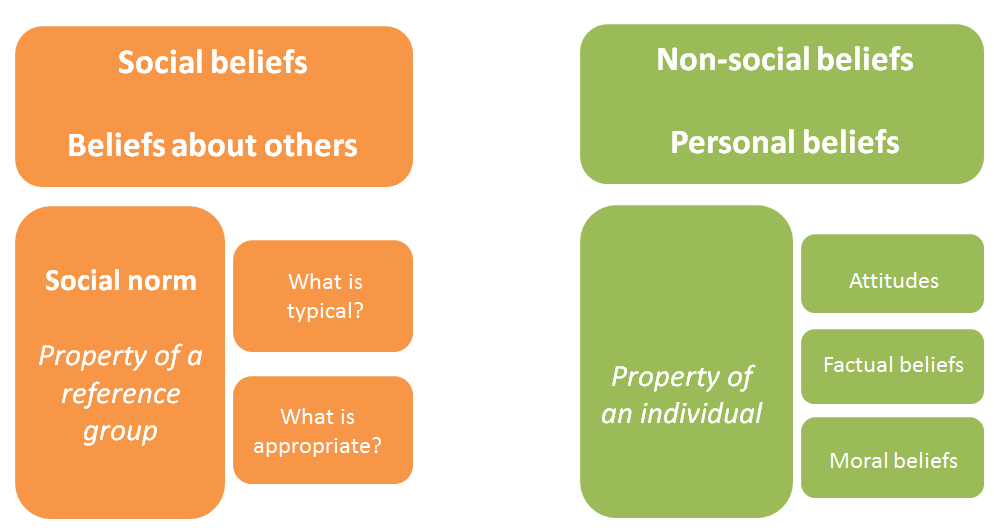
- A norm is a social construct. It exists as a collectively shared belief about what others do (what is typical) and what is expected of what others do within the group (what is appropriate). Social norms are generally maintained by social approval and/or disapproval...
- An attitude is an individual construct. It is an individually held belief that has an evaluative component—suggesting that something is good, bad, exciting, boring, sacrilegious, disgusting, etc....
- Individuals may also hold factual beliefs about reality and the physical world that may or may not be true. For example, I may believe that if I don't bury the placenta of my newborn, bad spirits will sicken my child. Sometimes all that is required to change behaviour is to correct factually inaccurate information. However, if all of my peers believe that you must bury the placenta or you are not a good mother, then I may continue the practice in order to receive their approval, even if I no longer believe in its value. Those whose opinions are important to me are called my 'reference group'."
A table in the resource offers one simple way to conceptualise different types of beliefs. The central distinction is between social and non-social beliefs: social beliefs are known as "interdependent" and are a property of a group, whereas non-social beliefs are the property of individuals.
Social norm theory distinguishes between what is typical (beliefs about what others do) and what is appropriate (beliefs about what others think one should do), because both can be important for shaping behaviour. A chart in the resource outlines different kinds of terminology used in the literature that refer to largely similar concepts. Namely, "descriptive norm", "collective behavioural norm", and "empirical expectation" all refer to what is typical in one's reference network; "injunctive norm", "collective attitudinal norm", and "normative expectation" refer to what is appropriate in one's reference network.
A clearer understanding of these concepts can help a practitioner diagnose the problem when it comes to addressing practices like female genital cutting, domestic violence, or early marriage. There is a matrix of linked factors - individual, social, structural, and material - that keep harmful behaviours in place and that need to be distinguished and considered. For instance, in some cases, "practices are driven almost entirely by structural or material factors rather than norms. Here, focusing on social norms would largely be ineffective. For example, if poor parents marry their children young because they want one less mouth to feed, focusing on early marriage as a social norm may be misguided. If, however, a main driver of early marriage is fear that unmarried girls may become sexually active and bring shame upon the family, then focusing on the collective expectations of virginity and family honour would be essential."
Five key readings are described that offer: (i) "a useful introduction to how strategies for change may be most effective when they promote norm change in multiple spheres"; (ii) a "guidance note introduces the major concepts of social norm theory and applies them to the specific challenge of preventing violence against women and girls"; (iii) "a theoretical framework that integrates different explanations of child marriage"; (iv) "an outline of a number of general considerations and measurement strategies to help with capturing norms and their change on...three elements"; and (v) "reviews [of] three case studies, engaging in a critical analysis of their design and evaluation in order to generate a list of considerations to guide future norms inventions aimed at GBV [gender-based violence], and more widely."
"As you read the recommended literature, keep in mind the following insights that have emerged from research and evidence-based practice:
- Building a new norm can often be easier and more strategic than attempting to dismantle a harmful one...
- ...Most successful interventions include processes to promote critical reflection, drawing on experiential learning and popular education techniques.
- Breaking one norm can make it easier to shift associated norms. For example, breaking down the norm that men alone have responsibility to provide economically for the family, can smooth the way for shifts in other gender-related role expectations.
- Consider...opportunities to build strategies around 'meta norms' that drive multiple behaviours. By challenging the norm that violence is an appropriate form of discipline, programmes can simultaneously attack a key rationale that undergirds corporal punishment in schools, harsh punishment at home, and wife beating in some settings.
- Identifying those individuals or reference groups whose opinions matter most can help effect change....If girls have traditionally not played sports because their families fear their reputation will be sullied, seeking to empower girls through sports will likely fail unless the project engages with family and community members as well as girls.
- Communicating change (through testimony, organised diffusion and pledges) as it begins to norms and behaviours begin to shift in an initial core group is important."
The resource concludes with questions to guide the readings.
Governance and Social Development Resource Centre (GSDRC) reading packs are commissioned by the United Kingdom (UK) Government's Department for International Development (DFID) for independent study and professional development use.
7
Email from Isobel Wilson-Cleary to The Communication Initiative on May 18 2016; and GSDRC website, May 20 2016.
- Log in to post comments