











































Vidura: A Journal of the Press Institute of India - October-December 2012 Edition
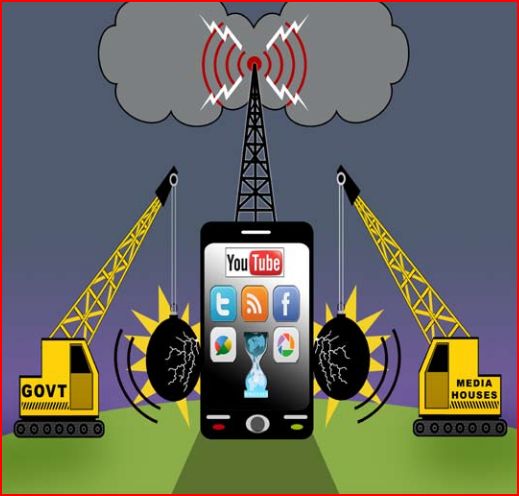
"As digital technology advances and digital products become cheaper, it will not be possible for governments to exercise control on the flow of information."
This resource on press freedom and the use of communication and media to articulate and defend human rights includes a number of strategic reflections on communication related to social change from (mostly) Indian journalists and thinkers. For example, educator Kanchan Malik argues that, as a community-driven, volunteer-run, not-for-profit set-up, the community radio sector in India must position itself differently in its process, approach, style, and substance in comparison to state-owned and commercial broadcasters. She asserts that it is possible for community radio stations to challenge the hegemony of the mainstream media and its programming methods only by developing rigorous and appropriate codes of conduct and practice in the spirit of self-regulation. Her piece includes codes of practice for community radio in India that may be used as an inventory for reference and are open to being adapted and adopted by different stations.
To highlight another contribution to this resource, Sakuntala Narasimhan writes about alternative means of communication, some of which are simple and proving effective. She gives the example of Edify School students on Kanakapura Road in Bangalore resorting to what this journal's editor, Sashi Nair, describes in the edition's introduction as "a novel way of communicating a public message - they blew a whistle every time they saw someone littering, and presented the offenders with a handout as well as a whistle. No righteous lecture. The novel approach of communicating a message seemed more effective in terms of promoting compliance." As Nair suggests, Narasimhan is pointing out that: "The definition of 'media' we are adopting, is based on a Western-centric idea where reading abilities are higher compared to the developing world...."
In another piece, Mexican journalist Anabel Hernández tells the story of her life in a country where the media "are afraid and preserve their economic interests with the government, and barely fight back when their journalists are killed, are threatened or disappear." In December 2010, when Hernández's book, The Drug Lords, a product of 5 years of journalistic investigation, was published, she was sentenced to death by high-ranking officials of the Ministry of Public Security of President Felipe Calderón's Government for having exposed his relationship with kidnappers and the Sinaloa Cartel.
Some of the writers explore issues related to children's health and rights. For example, journalist Neeraja Choudhury writes about the coming together of 5 young parliamentarians who formed the Citizens Alliance Against Malnutrition group and visited several Indian villages. Anjali Singh of the Saaksham Foundation in Uttar Pradesh writes about incidences of violations against children continuing even after they have come to the attention of the administration and enforcement agencies. She says there is a lack of enthusiasm among the stakeholders, particularly when it comes to the implementation of the Juvenile Justice Act. From an event conducted by Tulir, Centre for Prevention and Healing of Child Sexual Abuse, in Chennai, Susan Philip reports how communication holds the key to the issue of child sexual abuse. Unfortunately, the information children gather about sexual activity comes largely from movies and media, which do not portray it in a responsible way. And from Bangalore, Pushpa Achanta says the guilty in child sexual abuse (CSA) cases can be members of the household or family, teachers, or caregivers, who "exploit the vulnerability of a child in a clandestine manner and leave her or him feeling confused, hurt and afraid. Overall, it's a petrifying situation for children and media must treat the issue with sensitivity."
Publishers
English
77
Emails from Kanchan K. Malik to The Communication Initiative on February 9 2013 and December 23 2013; and email from Sashi Nair to The Communication Initiative on June 23 2020.
Comments

Education
This is very much interesting. Thanks for sharing this useful information.
Regards..
Mathan kumar
- Log in to post comments