










































Programme Ra Manual
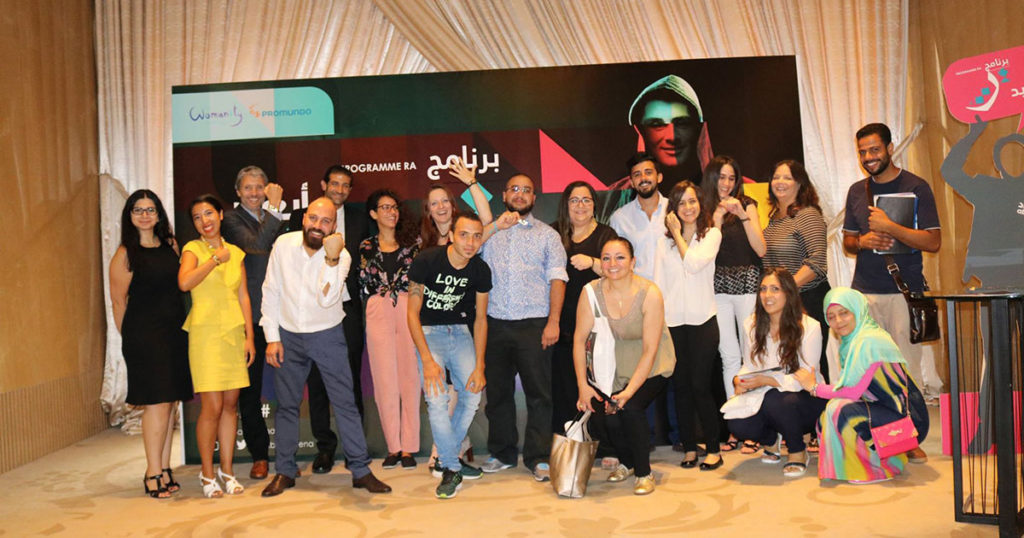
"Discussing mutual respect, the way that other people think, and how we should respect each other's opinions were crucial in making me consider changing the way I think and behave with others." - young man taking part in a Programme Ra training
This is a strategy and capacity-building training manual on working with young men around issues like non-violence, sexual and reproductive health and rights (SRHR), substance abuse, and gender equality. It has been adapted from the Program H manual, which was developed by Promundo in Brazil, and has been widely used globally within ending violence against women and girls programming. The Programme Ra manual was adapted by ABAAD-Resource Center for Gender Equality for the Lebanese context and was tested, translated, and validated by local experts, trainers, and young men from Lebanese and refugee communities.
Specifically, launched in July 2016 with support from the Womanity Foundation, Programme Ra - named after Rajol, the word for man in Arabic - is the first adaptation of Promundo's Program H in the Middle East. Developed by Promundo and partners in Brazil in 2002, Program H has been used in more than 22 countries around the world in programming to end violence against women and girls. Subject to 9 impact evaluations (see, for example, Related Summaries, below), it has proved successful in raising awareness about and transforming gender stereotypes, aiming to create sustainable behavioural change among boys and men in order to promote gender equality more broadly. Taking into account Lebanon's refugee crisis, Programme Ra was designed to reach young men between 14 and 24 from refugee and marginalised host communities and from both urban and rural areas. Programme Ra includes dramatisations, games, and debates that spark individual and collective critical reflection about: how men and women are taught to think about what it means to be a man or a woman; the impact of this socialisation; and how individuals of all genders can benefit from tackling gender stereotypes, questioning their existing attitudes, and marking new milestones on the path toward gender equality.
According to the manual, working with young and adult men from a gender perspective comes down to 2 main points:
- Gender roles: engaging boys in discussions and think-tanks about the absence of gender equality and helping them see how roles are enforced exclusively on women like childcare, house chores, and sexual/reproductive health.
- Equality and equity among sexes: exploring the various needs of boys with regard to their health and development as affected by their upbringing. This means, for example, the engagement of boys in discussions about substance abuse and risky behaviours, as well as helping them understand the deeper reasons why they feel compelled to act or behave in a certain way.
This manual attempts to combine these 2 perspectives in the following sections:
- Workshop 1: What is Gender?
- Workshop 2: Act Like a Man, Act Like a Woman
- Workshop 3: Expressing Emotions
- Workshop 4: Sexually Attractive or Exciting Bodies
- Workshop 5: I want to, I don't want to, I want to...
- Workshop 6: What are drugs?
- Workshop 7: Taking the Decision to Use Drugs
- Workshop 8: Labelling
- Workshop 9: What Is Violence?
- Workshop 10: What do I do When I Feel Angry?
- Workshop 11: From Violence to Respect in Intimate Relations
- Workshop 12: Dating Scenarios
"Ideally, 2 facilitators will be conducting the session to provide support to each other, mitigate and resolve conflicts if the needed arises, and monitor any unusual indicators that needs to be taken into consideration during evaluation. The participants who show their interest, engagement and knowledge are more have a higher sense of responsibility on these subjects more like to become effective leaders in the transformation process."
75
Promundo website, January 3 2017; and email from Annaick Miller to The Communication Initiative on January 23 2017. Image credit: ABAAD
- Log in to post comments